You can absolutely sell a house with tenants still living in it. Landlords do it all the time, and it’s more common than most people think. The process looks a little different than selling an empty property, but the core steps are well established and completely legal in every state.
Maybe your tenants are great but you’re done being a landlord. Maybe they’ve stopped paying rent and you just want out. Whatever brought you here, this guide walks through everything you need to know about selling a rental property with tenants, from your legal obligations to the fastest way to close.
Can You Sell a House With Tenants Living in It
The short answer is yes. Owning a rental property doesn’t mean you have to wait until it’s empty to sell. Your rights as a property owner include the right to sell that property at any time, regardless of occupancy.
That said, you do need to respect the lease agreement that’s already in place. A lease is a legally binding contract, and a sale doesn’t automatically cancel it. The new owner typically inherits the existing lease and all the terms that come with it.
Most states follow this principle. According to Nolo’s legal reference on tenant rights during property sales, the buyer steps into the shoes of the landlord. They take on the same responsibilities you had, including honoring the lease term, returning the security deposit, and following proper notice procedures.
So can you sell a house with tenants in it? Without question. You just need to understand what type of lease you’re working with, because that changes your timeline and your options.
Tenant Rights by Lease Type
The lease your tenant signed determines how much flexibility you have when selling. There are two main types, and each one comes with different rules for both you and the buyer.
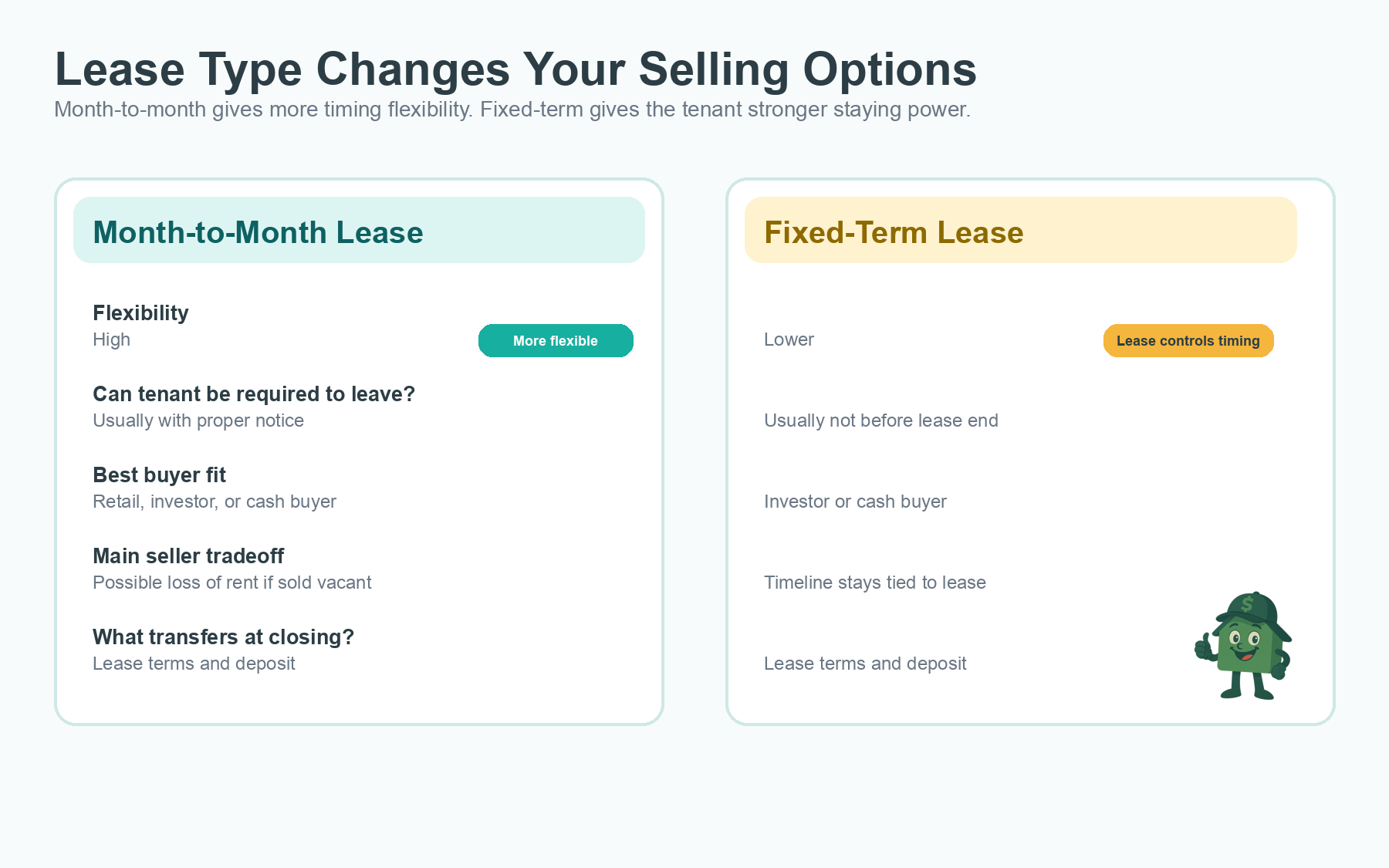
Month-to-Month Leases
If your tenant is on a month-to-month lease, you have the most flexibility. You can typically end the tenancy by giving proper written notice, which is usually 30 to 60 days depending on your state. Some states like California require 60 days if the tenant has lived there for more than a year.
This gives you the option to sell the property vacant if that’s what you prefer. Many landlords choose this route because an empty house often appeals to a wider pool of buyers, especially owner-occupants. But it also means your property sits without rental income during the sale process.
You don’t have to end the lease, though. Plenty of buyers, especially investors, actually prefer to buy a property that already has a paying tenant. That’s guaranteed income from day one, and they don’t have to spend time finding someone new.
Fixed-Term Leases
A fixed-term lease, like a standard 12-month agreement, is a different situation. You generally can’t force a tenant out before the lease expires just because you want to sell. The tenant has a legal right to stay through the end of the lease term, and the new buyer inherits that obligation.
Some landlords try to negotiate an early termination with the tenant. This might involve offering “cash for keys,” where you pay the tenant an agreed amount to move out before the lease ends. It’s not always cheap, but it can speed things up if you need the property empty.
If you’re not in a rush, you can sell the property with the lease in place. The buyer takes over as landlord when the sale closes. According to the Consumer Financial Protection Bureau, federal protections under laws like the Protecting Tenants at Foreclosure Act apply in specific circumstances, so it’s worth knowing how federal rules interact with your state’s landlord-tenant laws.
Your Options for Selling a Rental Property With Tenants
You’ve got a few different paths when it comes to selling a house with renters. Each one has tradeoffs in terms of speed, price, and hassle. The right choice depends on your situation, your timeline, and how cooperative your tenants are.
List It on the Market With a Real Estate Agent
This is the traditional route. You hire an agent, list the property on the MLS, and wait for offers. The upside is that you might get top dollar, especially in a hot market. The downside is that it takes time, usually 60 to 90 days or longer.
Selling a tenant-occupied property through a traditional listing comes with some real headaches. You need your tenants to cooperate with showings, keep the place clean, and be available for inspections. Some tenants will do this happily. Others will make it as difficult as possible, especially if they’re worried about being displaced.
There’s also the financing issue. Many traditional buyers use mortgages, and lenders can be picky about tenant-occupied properties. If the property doesn’t appraise well or if there are lease complications, the deal can fall apart weeks into the process.
Sell to a Real Estate Investor
Investors buy rental properties all the time, and many of them specifically look for tenant-occupied homes. A property with a paying tenant is an income-producing asset from the moment the deal closes. That’s attractive to anyone building a rental portfolio.
The process is usually faster than a traditional sale. Investors are experienced with tenant situations and won’t be scared off by an occupied property. They’re also more likely to pay cash, which eliminates the appraisal and financing contingencies that slow things down.
The tradeoff is price. Most investors buy below market value because they’re looking for returns on their investment. That said, when you factor in the months of mortgage payments, agent commissions, and repair costs you’d spend on a traditional sale, the net difference is often smaller than you’d expect.
Sell to a Cash Home Buyer
This is the fastest option, and it’s the one we specialize in at House Buyers Cash. When you sell your house for cash, you skip the listings, the showings, the repairs, and the waiting. We buy properties in any condition, with or without tenants, and we can close in as little as seven days.
For landlords dealing with difficult tenant situations, this is often the path of least resistance. You don’t need to coordinate showings around your tenant’s schedule. You don’t need to worry about whether a lender will approve the deal. And you don’t need to spend money fixing the place up first.
| Category | List With Agent | Sell to Investor | Sell to Cash Buyer |
| Speed | Low | Medium | High |
| Convenience | Low | Medium | High |
| Top-end price | High | Medium | Medium |
| Best when… | Best when price matters most and you can tolerate showings and a longer sale window. | Best when you want a faster sale and a buyer comfortable with tenants. | Best when speed, certainty, and low friction matter more than squeezing out every dollar. |
How Cash Buyers Handle Tenant-Occupied Properties
When you sell a rental property for cash to a company like House Buyers Cash, we take on the tenant situation for you. That’s one of the biggest advantages of going this route, and it’s something a lot of landlords don’t realize until they start exploring their options.
We’ve bought hundreds of properties with tenants in place. Some had cooperative, long-term renters who were happy to stay. Others had tenants who hadn’t paid rent in months. We’ve handled just about every scenario you can imagine, and we know how to work through each one legally and respectfully.
The process is simple. You reach out to us and tell us about the property, including the tenant situation. We make you a fair cash offer, usually within 24 to 48 hours. If you accept, we handle all the paperwork, coordinate with the title company, and close on your timeline. The tenant situation becomes our responsibility at closing.
We don’t require you to evict anyone first. We don’t ask you to negotiate lease terminations. And we don’t reduce our offer just because tenants are living there. We buy the property as-is, tenants included. If you want to sell your house as-is for cash, that’s exactly what we do.
What Happens to the Lease When You Sell
This is one of the most common questions landlords have, and the answer is pretty clear. In almost every state, the lease transfers to the new owner. The sale doesn’t void it, pause it, or change any of its terms.
Think of it this way. The lease is attached to the property, not to you personally. When you sell, the buyer becomes the new landlord and inherits all the rights and obligations of the existing lease. That includes the rent amount, the lease duration, and the security deposit.
The U.S. Department of Housing and Urban Development (HUD) provides guidance on tenant rights that reinforces this point. Tenants don’t lose their housing protections just because the property changes hands.
If the tenant is on a month-to-month lease, the new owner can choose to end it with proper notice after closing. If there’s a fixed-term lease, the new owner has to honor it through the end date. Some buyers want that existing lease in place. Others plan to give notice as soon as legally allowed. Either way, you as the seller are done once the closing is complete.
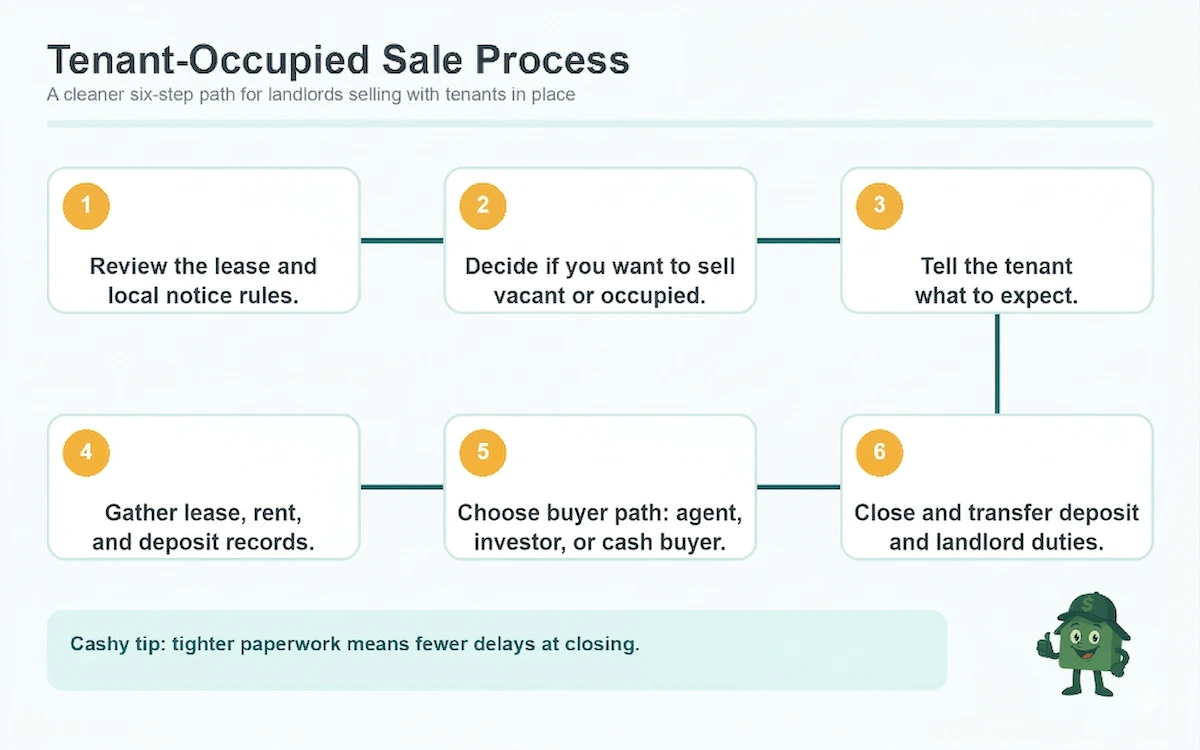
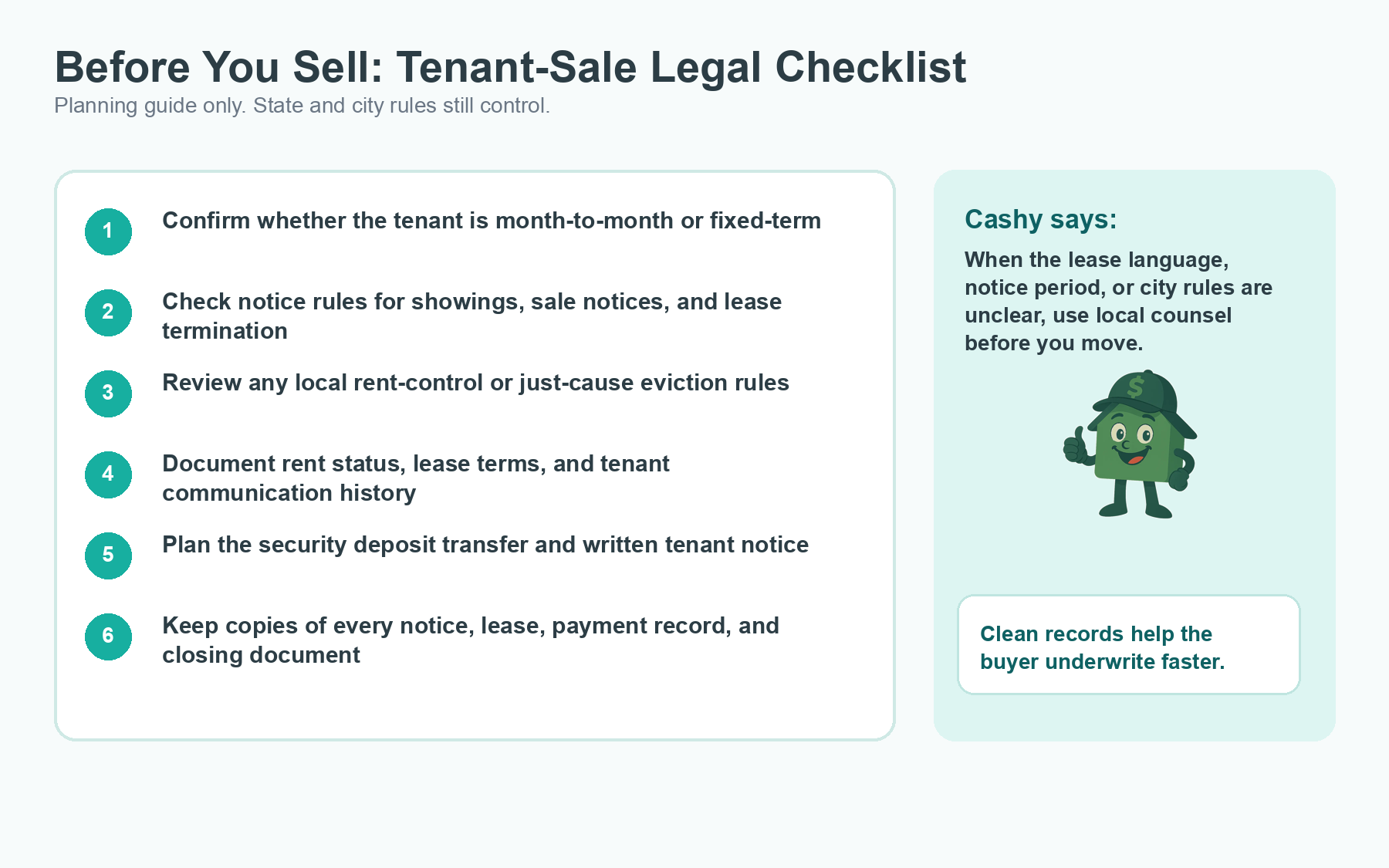
One thing to keep in mind is the security deposit. Most states require you to transfer the tenant’s security deposit to the new owner at closing. You’ll also need to notify the tenant in writing about where their deposit is being held. Failing to do this can create legal problems for both you and the buyer, so make sure your closing attorney or title company handles the transfer properly.
How to Tell Your Tenants You’re Selling
This conversation doesn’t have to be uncomfortable, but it does need to happen. Your tenants deserve to know what’s going on, and in many states you’re legally required to tell them. Even where it’s not required, it’s just good practice.
The earlier you have this conversation, the better. Tenants who feel blindsided tend to be less cooperative during the sale process. Tenants who feel respected and informed are far more likely to work with you, whether that means keeping the house tidy for showings or agreeing to a lease termination.
Start with a simple, honest conversation. Let them know you’ve decided to sell the property and explain what that means for them. If they’re on a fixed-term lease, reassure them that the new owner will honor their lease. If they’re month-to-month, be upfront about the timeline and any notices they should expect.
Follow up the conversation with a written notice. This protects you legally and gives the tenant a clear record of what’s happening. Include the date you plan to list or sell, any changes to their point of contact, and what they can expect during the process.
I’ll be honest, some tenants will take the news well and some won’t. If you’re dealing with a tenant who might become difficult, selling to a cash buyer can remove a lot of that friction. We close fast, and the tenant doesn’t need to deal with repeated showings or uncertainty about their living situation.
Legal Considerations for Selling a Tenanted Property
Every state has its own landlord-tenant laws, and they affect how you sell a property with tenants. Getting the legal side right protects you from lawsuits, delays, and financial penalties. A real estate attorney familiar with your state’s rules is worth every penny.
Notice requirements are the big one. Most states require you to give tenants written notice before showing the property, typically 24 to 48 hours in advance. Some states also require notice of the sale itself, separate from any lease termination notices.
You also need to know your state’s rules around lease termination. In some states, a new owner can terminate a month-to-month tenancy with 30 days notice. In others, it’s 60 or even 90 days. The American Apartment Owners Association maintains state-by-state guides that are a good starting point for understanding your local requirements.
Discrimination laws apply throughout the sale process. You can’t target a specific tenant for eviction or lease non-renewal based on race, religion, family status, disability, or any other protected class. Fair housing rules apply whether you’re selling or renting, and violations carry serious penalties.
If your property is in a city with rent control or just-cause eviction ordinances, the rules get more specific. Cities like Los Angeles, San Francisco, New York, and others have additional protections that limit when and how you can end a tenancy. Selling the property doesn’t override these local laws.
One more thing worth mentioning. If you’re selling because of a tenant dispute, nonpayment, or property damage, document everything. Keep copies of all communications, lease violations, and financial records. This documentation protects you during the sale and provides the new owner with a clear picture of the situation.
When Selling With Tenants Makes the Most Sense
Selling a house with tenants isn’t always ideal, but there are situations where it’s clearly the best move. Recognizing when those situations apply to you can save months of time and thousands of dollars.
If your tenants are paying rent on time and taking care of the property, you’re actually in a strong position. Investor buyers will pay more for a property that already produces reliable income. You can market it as a turnkey rental, and the tenant becomes a selling point rather than an obstacle.
If you’re dealing with problem tenants, selling with them in place can still make sense, just through a different channel. Trying to evict a tenant before selling adds time, legal costs, and stress. The eviction process can take months in some states, and there’s no guarantee it will go smoothly. Selling to a cash buyer lets you skip that entire process.
Landlords who live far from their rental property often find selling with tenants in place to be the simplest option. Managing showings and repairs from a distance is tough, and coordinating a traditional sale when you can’t easily visit the property adds another layer of difficulty.
If you’ve inherited a rental property and don’t want to be a landlord, selling it with tenants is usually faster than waiting for the lease to end. You get cash in hand without having to learn the ins and outs of property management.
And if you just need to sell quickly for any reason, whether that’s a financial change, a divorce, a job relocation, or burnout from being a landlord, selling with tenants to a cash buyer like House Buyers Cash is often the fastest path from decision to closing. We can buy your house in days, not months.
Tips for Getting the Best Outcome
A few practical steps can make the sale go smoother, regardless of which option you choose. Most of these come down to preparation and communication.
Gather all your lease documents, rent payment records, and any correspondence with tenants before you start the process. Buyers, especially investors, will want to see this information. Having it organized ahead of time speeds up due diligence and shows you’ve managed the property responsibly.
Get a clear picture of the property’s condition. If you haven’t been inside the unit recently, schedule an inspection, with proper notice to the tenant. Knowing what repairs might be needed helps you price the property accurately and set expectations with potential buyers. Though if you’re selling to us, condition doesn’t matter. We buy properties in any shape.
Consider the timing of your sale relative to the lease term. Selling a few months before a lease expires gives the new owner flexibility to either renew with the tenant or take possession of an empty property. That flexibility can actually increase your sale price.
If your tenant has expressed interest in buying the property, that’s worth exploring. Selling directly to your tenant eliminates the need for showings, reduces closing complexity, and keeps everyone happy. It doesn’t work in every situation, but when it does, it’s a clean transaction for both sides.
Frequently Asked Questions About Selling a House With Tenants
Can You Sell a House With Tenants in It
Yes. You can sell your property at any time, even with tenants living in it. The existing lease transfers to the new owner, and the tenant’s rights remain intact through the end of the lease term. This is true in all 50 states, though specific notice requirements vary by location.
How Do You Sell a House With Tenants in It
You have three main options. List it traditionally with a real estate agent, sell it to a real estate investor, or sell it to a cash home buyer. The best option depends on your timeline, the tenant’s cooperation level, and how much you’re willing to spend on the sale process. Cash sales are typically the fastest and involve the least hassle.
Can I Sell My Rental Property With Tenants in It
Absolutely. Selling rental property with tenants is a normal real estate transaction. You’ll need to disclose the tenancy to potential buyers and provide copies of the lease agreement. The new owner takes over landlord responsibilities at closing, including the lease terms and the security deposit.
What Happens to My Tenants When I Sell My House
Your tenants stay in the property under the existing lease terms. The buyer becomes their new landlord. If the tenant has a fixed-term lease, the new owner must honor it. If the tenant is month-to-month, the new owner can give notice to end the tenancy according to state law. Either way, tenants can’t be forced to leave just because the property sold.
How Do I Sell My House With Sitting Tenants
The fastest way is to sell to a cash buyer who specializes in tenant-occupied properties. We buy properties with sitting tenants every week. You don’t need to wait for the lease to end, negotiate an early move-out, or deal with the eviction process. We handle the tenant situation after closing.
Do I Have to Evict My Tenants Before Selling
No. Evicting tenants before a sale is not required in any state. Many landlords choose to sell with tenants in place, especially to investors or cash buyers who are comfortable taking over the tenancy. Eviction is expensive, time-consuming, and often unnecessary when you sell to the right buyer.
Will I Get Less Money if I Sell With Tenants
It depends on the buyer and the tenant. A property with a reliable, paying tenant can actually be worth more to an investor than an empty one. A property with a problem tenant might sell for less on the open market, but a cash buyer will often make a fair offer regardless of the tenant situation. When you add up the carrying costs, agent commissions, and repair expenses of a traditional sale, the net difference is often minimal.
How Fast Can I Sell a Rental Property for Cash
With House Buyers Cash, you can get a cash offer within 24 to 48 hours and close in as little as seven days. There are no showings, no repairs, no appraisals, and no financing contingencies. We buy tenant-occupied properties on your timeline. Reach out to us today and we’ll walk you through the process.